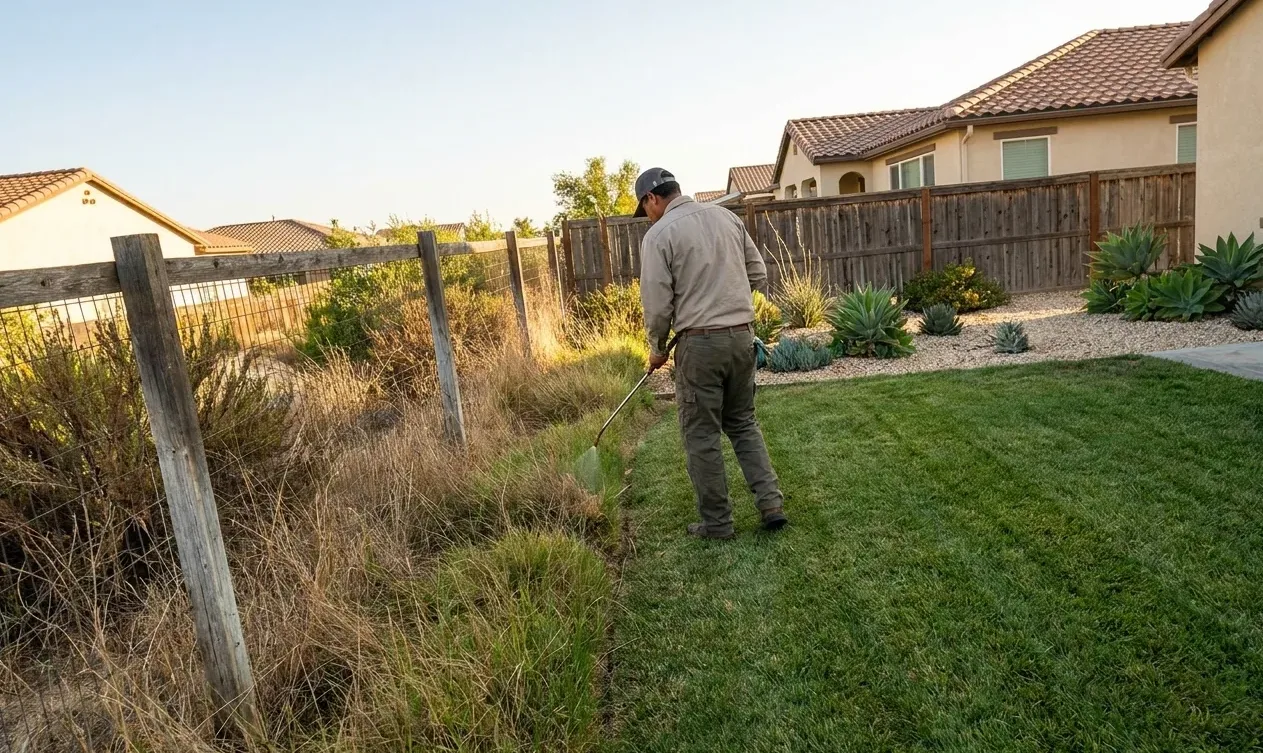
A sealed building and a managed margin, reviewed on a schedule. We will not pretend the arroyo can be cleared.





Rodents do not keep office hours. Someone answers the Pasadena line at night and at the weekend, so you can book the visit when you find the problem rather than the next working morning.
Your technician confirms a window with you directly and works around school runs, shift patterns and trading hours instead of handing you a vague all-day slot.
Call before midday and same-day service across Pasadena is usually available. The person who inspects your property is the person who treats it and comes back for the follow-up.
The Arroyo Seco runs the length of western Pasadena, and for the properties along it the rodent problem has a completely different shape from the one three streets east. The arroyo is continuous native habitat, protected, wooded, watered for at least part of the year, and directly adjacent to residential streets in Linda Vista, San Rafael and the Arroyo Seco neighbourhood itself.
Against a protected boundary there is no honest promise of a permanent end, so Rodent Control Pasadena sets the objective as a closed building and a watched margin and says so in writing.
It means the supply of animals does not run out. On an interior lot in Pasadena a house can be sealed and the problem genuinely finished, because the pressure from outside is modest. On an arroyo-adjacent lot it cannot, and anybody who tells you otherwise is selling something.
It also means the timing is predictable. Pressure rises when the arroyo dries through late summer and irrigated gardens become the nearest reliable water, and again during winter rain when the low ground floods and animals move uphill onto the residential terraces. Owners here describe a problem that returns on a schedule — which is exactly what it is.
More than roof rats. The arroyo carries a genuine wildlife population, and while most of it is nothing to do with us, the relevant part is that the ground cover, the water and the continuous connectivity sustain rodent numbers that no residential street produces on its own. Where the corridor passes under a road, the culvert is shelter and highway in one, and it is entirely outside anybody's control.
Tell us what you have seen and where. We will book an inspection, put the findings in writing and only then talk about treatment.
Call (323) 301-7551Everything that applies across Pasadena applies more here, because the arrival rate is higher and any opening left will be found sooner. A nearly complete seal on an arroyo lot is not much better than none. The eave line, the subfloor vents, the utility penetrations and the garage all get closed, not just the ones that look most likely.
Most of what makes it worse is fixable and on your side of the fence. Ivy and dense ground cover running up to the house. Woodpiles. Fruit dropping and not being collected. Bird feeders. Compost that is not enclosed. Irrigation running into August when the arroyo has nothing. None of that is exciting advice and all of it changes the numbers.
Because the pressure is seasonal and continuous, these properties suit being looked at again rather than treated once. We would rather set that expectation at the start than have you conclude in nine months that the work failed.
We will not suggest the arroyo can be cleared, managed or treated. It is protected habitat and it is not going anywhere. What we can do is make the building not worth entering and the margin less worth crossing, and be honest that those are the two levers that exist.
One call books the inspection. We will tell you what we find, what it will take to fix and what you can do yourself — before you commit to anything.
Call (323) 301-7551