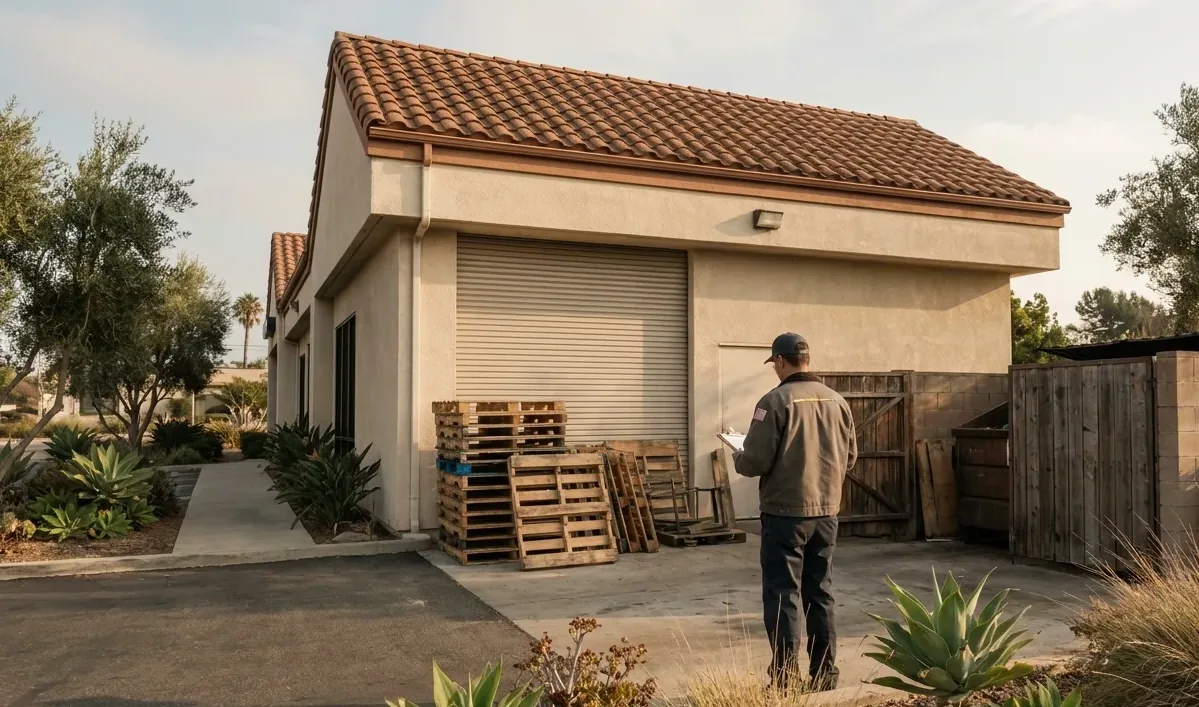
Exclusion plus monitoring, because a trading premises cannot be sealed once and forgotten.





Rodents do not keep office hours. Someone answers the Pasadena line at night and at the weekend, so you can book the visit when you find the problem rather than the next working morning.
Your technician confirms a window with you directly and works around school runs, shift patterns and trading hours instead of handing you a vague all-day slot.
Call before midday and same-day service across Pasadena is usually available. The person who inspects your property is the person who treats it and comes back for the follow-up.
Commercial work is the same trade as residential with three things on top: the building cannot be sealed once and left, the consequence of a sighting is not merely unpleasant, and the timetable is usually set by somebody other than you.
A house can be closed and stay closed. A restaurant, a shop or a stockroom has doors that open for deliveries, a service entrance in use through the day, and a waste area concentrating food in one place at the back. None of those can simply be sealed away, so the emphasis moves from exclusion alone to exclusion plus monitoring.
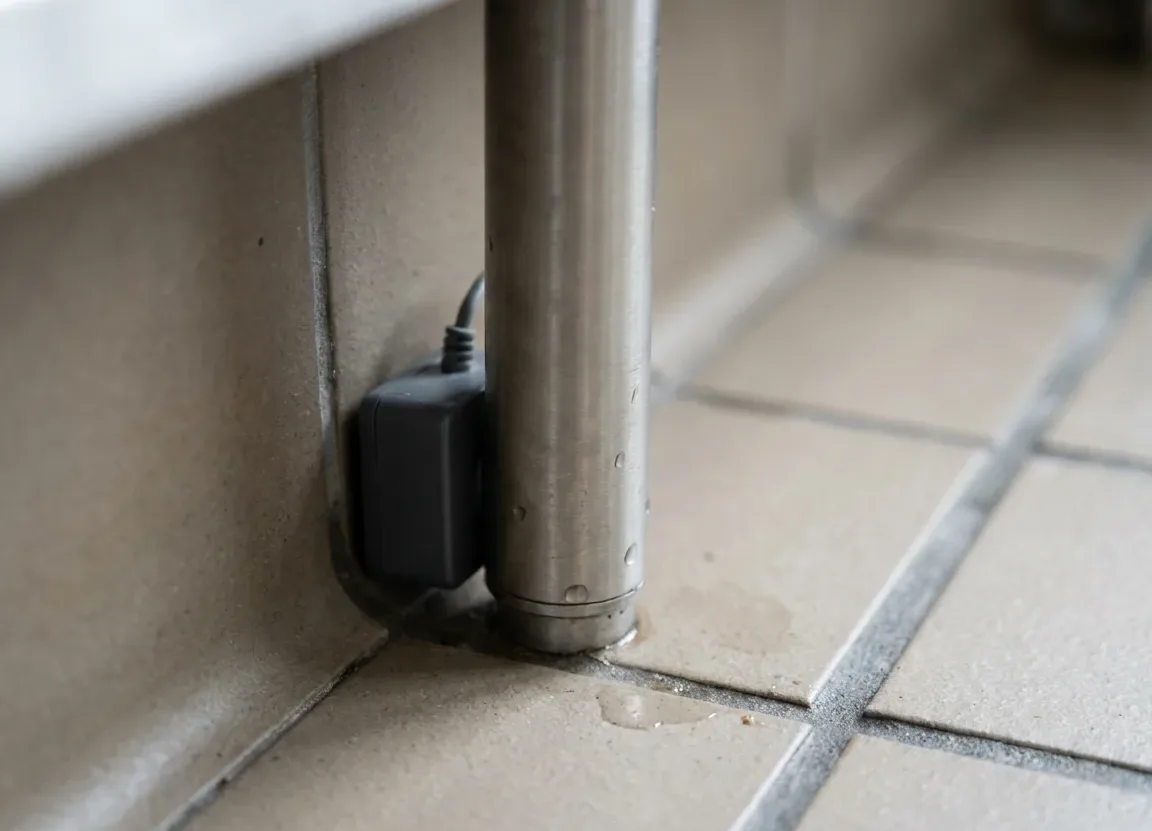
Cardboard is one of the most reliable vehicles rodents have, and a business taking pallets several times a week is taking that risk several times a week. How quickly packaging is broken down and removed matters more than most operators expect.
Much of the commercial fabric here is late nineteenth and early twentieth century, in continuous use and altered many times. Party walls, light wells, basements connected under the pavement and service risers threaded through a century of remodelling are not accidental openings — they are how the buildings were made. What can be closed gets closed; what cannot gets monitored, and we are clear about which is which.
In a multi-tenancy building animals travel roof voids, ceiling voids and risers across lease boundaries without regard for them. Treating one unit while the one next door is untouched usually just moves the problem along the corridor. Where a building-wide approach is what is actually needed we say so in writing, including when that is inconvenient for whoever is paying.
Where the paperwork has to satisfy an inspector as well as control rodents, Rodent Control Pasadena keeps station maps, visit dates and findings in a form that stands up to being read.
Scheduled visits at an interval set by what the premises actually is, worked around trading hours rather than against them.
Exterior housings on the routes the animals genuinely use — the base of a boundary wall, the run from open ground, behind the bin enclosure — anchored, mapped, and opened and recorded every visit. The consumption record across visits is the useful output rather than the boxes existing.
Interior work mechanical, never chemical. An animal that takes bait indoors dies in a ceiling void above a kitchen at the worst possible moment.
Documentation every visit, because for a food business the record is part of the point: station locations, consumption, findings and recommendations, in a form an inspection will accept.
Tell us what you have seen and where. We will book an inspection, put the findings in writing and only then talk about treatment.
Call (323) 301-7551Kitchens, because the harbourage is behind and beneath equipment that rarely moves and both heat and water are there. Stockrooms, because of the cardboard. Waste areas, because an enclosure that is overfilled, propped open or sited too close to the building sustains a population a few metres from a back door — and nothing done indoors addresses a supply that close.
If the structure has a problem exclusion cannot solve — a shutter that must stand open for trade, a shared void you do not control, a neighbouring unit that is the real source — you will have it early and on paper. We would rather set that out than invoice a monthly visit against something nobody is addressing.
Step 1: Free On-Site Inspection - Our Pasadena team visits your location to assess the rodent activity.
Step 2: Customized Treatment Plan - We develop a tailored strategy using safe, effective methods.
Step 3: Implementation & Monitoring - Apply treatments with minimal disruption and schedule follow-ups.
Step 4: Ongoing Support - Provide maintenance to prevent recurrence and ensure lasting protection.
Rats, mice and squirrels only. That is the whole of our commercial work in Pasadena, CA 91101.
Our local team at 778 E Colorado Blvd offers same-day service for urgent commercial rodent callouts in Pasadena.
Yes, we use EPA-approved, eco-friendly products that are safe for employees, customers, and the Pasadena environment.
Absolutely, our quarterly plans help Pasadena businesses stay ahead of reinfestation and keep the building closed.
One call books the inspection. We will tell you what we find, what it will take to fix and what you can do yourself — before you commit to anything.
Call (323) 301-7551