Rats in a 1915 bungalow are a subfloor and eave-line problem, not a kitchen one. We work the void and the overhang, because that is where they are.





Rodents do not keep office hours. Someone answers the Pasadena line at night and at the weekend, so you can book the visit when you find the problem rather than the next working morning.
Your technician confirms a window with you directly and works around school runs, shift patterns and trading hours instead of handing you a vague all-day slot.
Call before midday and same-day service across Pasadena is usually available. The person who inspects your property is the person who treats it and comes back for the follow-up.
Pasadena is a Craftsman city. Whole districts — Bungalow Heaven, Garfield Heights, Madison Heights, large parts of Historic Highlands — are made up of houses built between about 1905 and 1930, and that single fact shapes almost every rodent job we take here.
These are good buildings. They are also buildings designed and constructed decades before anyone thought about sealing a house against wildlife, and time has opened a number of routes that were never intended to exist.
Almost none of this housing sits on a slab. There is a subfloor void beneath the boards, ventilated by screens set into the foundation wall, and on a hundred-year-old house those screens are frequently original. Corroded, torn, or missing entirely. That void is dry, dark, undisturbed and connected to the wall cavities, which makes it the single most useful space in the building if you are a rat.
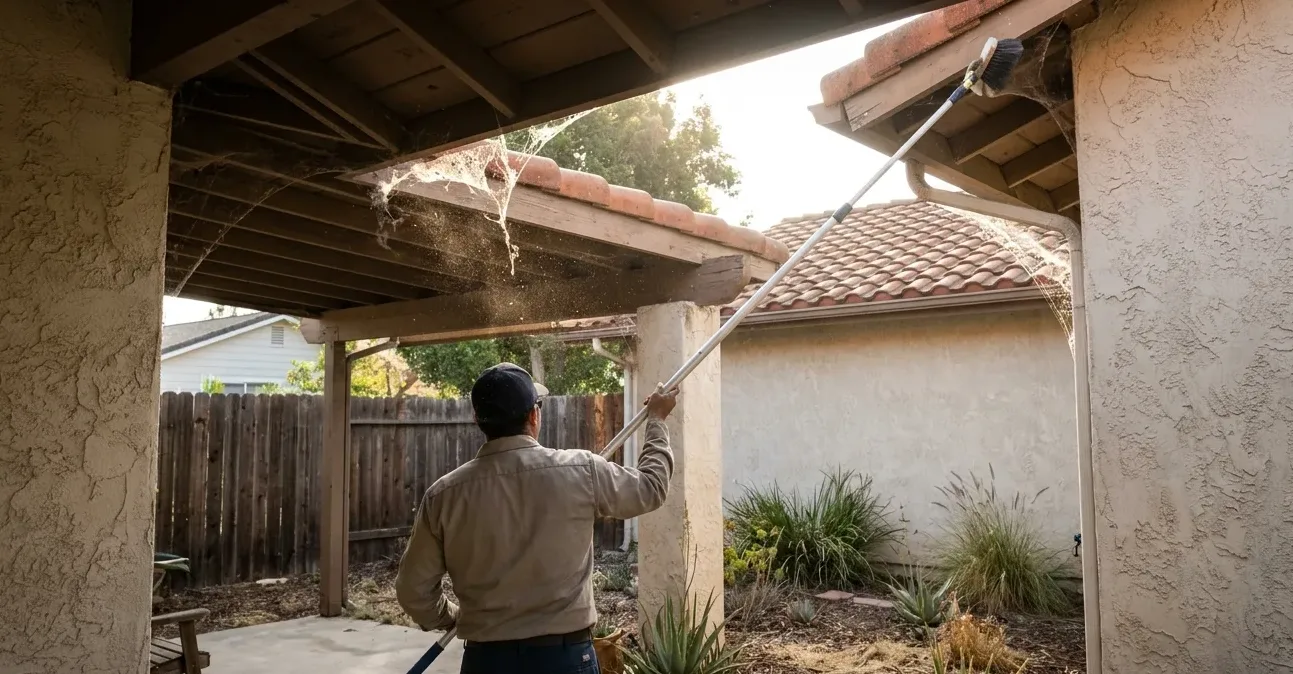
The wide overhanging eave is the defining Craftsman detail and it is also a sheltered horizontal run the length of the house. Where the rafter tails meet the wall, where a soffit was boxed in during a later remodel, and where the roof changes pitch over a porch or a dormer, there are gaps. They are two metres up and invisible from the ground.
Craftsman stock is most of what Rodent Control Pasadena works in a given week, and the openings on it are predictable enough that we usually know where to look before the ladder comes off the van.
A house that has stood for a century has usually been altered several times — a sleeping porch enclosed, a kitchen extended, a bathroom added, services rerouted twice. Every junction between original and added construction is a potential opening, and the older the alteration the less likely it was ever properly closed.
Tell us what you have seen and where. We will book an inspection, put the findings in writing and only then talk about treatment.
Call (323) 301-7551Slowly, and from underneath as well as above. The subfloor gets entered wherever access allows, because that is where the evidence is on this housing — droppings along the joists, rub marks where fur has repeatedly brushed timber, and daylight showing through a failed vent.
Then the eave line, from a ladder, along every elevation rather than the one nearest whichever room the noise is in. Then the interior, if there is anything to find there at all, which on a bungalow there frequently is not.
Sealing is specified in stainless or galvanised mesh and metal flashing, cut and fitted rather than stuffed. On a house of this age we will also say plainly where a repair is a carpenter's job rather than ours — a rotted rafter tail is not something to cover with mesh and call finished.
People buy these houses for the detail, and the detail is exactly what we are working around. Vent screens can be replaced in a period-appropriate pattern. Mesh can be fitted behind a detail rather than across it. It takes longer and we would rather take longer than fit something crude to a building that has stood this well for this long.
One call books the inspection. We will tell you what we find, what it will take to fix and what you can do yourself — before you commit to anything.
Call (323) 301-7551