Yours to keep whether or not you have the work done. Quoting a rodent job without looking is inventing a number.





Rodents do not keep office hours. Someone answers the Pasadena line at night and at the weekend, so you can book the visit when you find the problem rather than the next working morning.
Your technician confirms a window with you directly and works around school runs, shift patterns and trading hours instead of handing you a vague all-day slot.
Call before midday and same-day service across Pasadena is usually available. The person who inspects your property is the person who treats it and comes back for the follow-up.
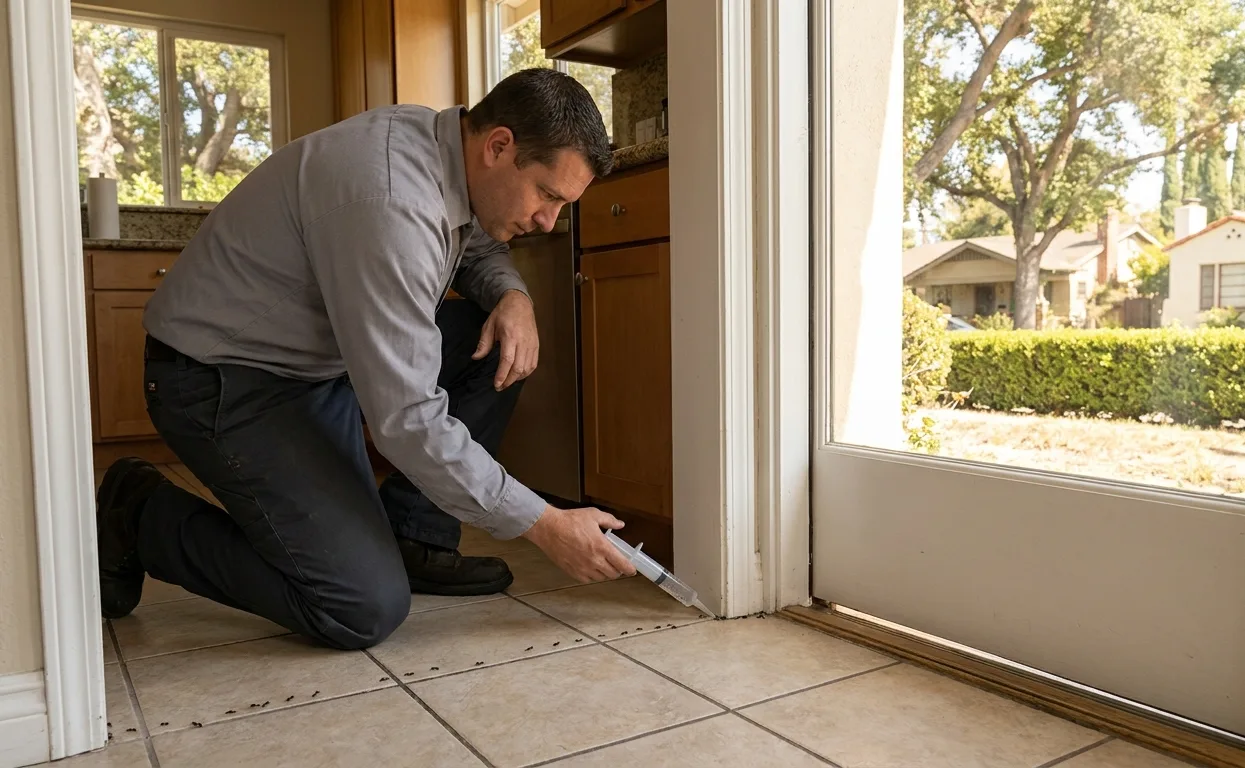
A survey is the one part of this trade where you can know exactly what you are buying before you buy it. Ours is a full walk of the property, every opening located and photographed, and a written map of how the building is actually being entered — handed over whether or not you go on to have the work done.
The map is the deliverable here: Rodent Control Pasadena photographs every opening and prices the repairs line by line, so you can take the document to your own carpenter if you would rather.
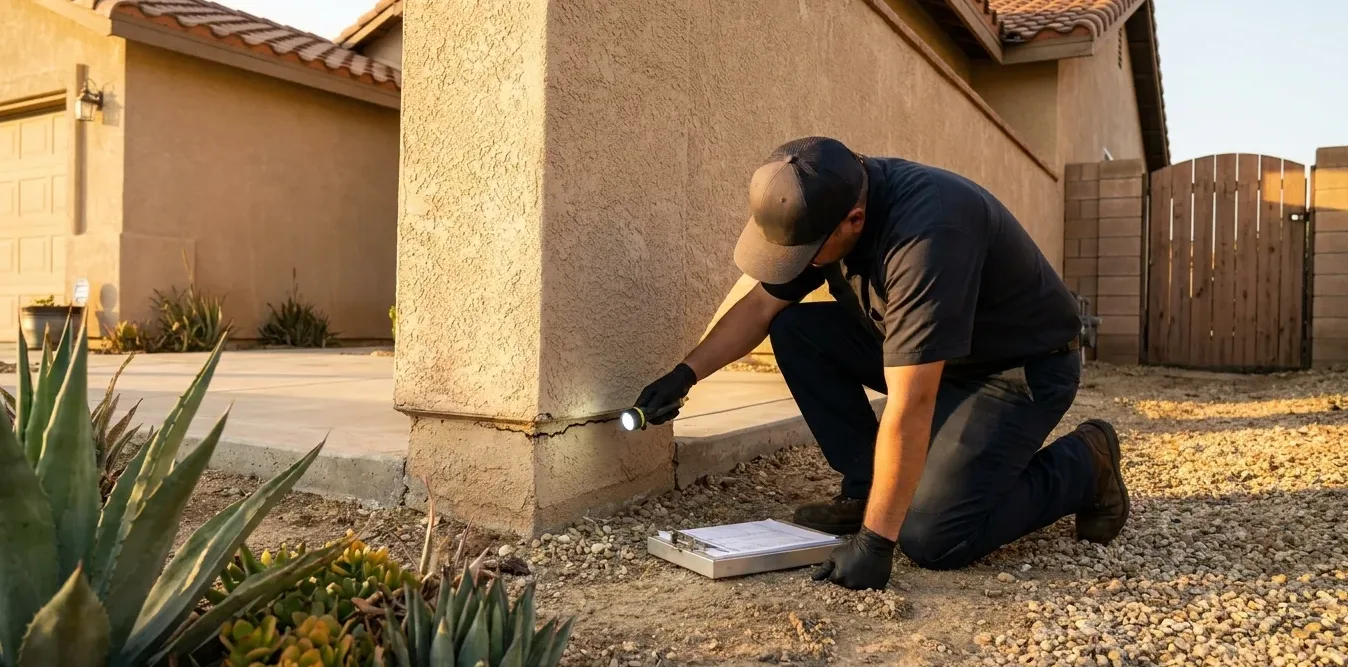
Because this housing stock has more places to look than most. A slab house in a newer suburb has a short list of possible openings. A 1915 bungalow with a raised foundation, a deep open eave, a detached garage, two later additions and a re-roof has a long one, and quoting it without looking would be inventing a number.
The three questions that decide the whole job are which animal it is, where it is getting in, and whether the subfloor and the roof void are connected. None of those can be answered on the telephone.
Every elevation, not the one nearest the noise. Rafter gaps, soffit joins, vents, and every junction where a roof plane changes.
Entered where access allows. Runways read from flattened insulation, droppings sampled for species and age, nesting located, chewed cable photographed.
Entered where access allows, which on this housing matters as much as the roof. Joist runs, vent screens, penetrations through the foundation wall, damp, and debris left by earlier trades.
Sill line, door, rot at ground level, roof, and what is stored inside.
Overhanging branches, ivy on walls, fruit trees, woodpiles, bins, compost, bird feeders, irrigation leaks, and what the boundary backs onto.
Tell us what you have seen and where. We will book an inspection, put the findings in writing and only then talk about treatment.
Call (323) 301-7551A written report listing every opening by position with a photograph of each, the species identified and the reasoning, an assessment of how established the population is, and the conducive conditions keeping the pressure up. Work is then priced against that list line by line, so the number is legible rather than a single figure.
Where the building is sound, the report says so. We would rather write a short report and lose a treatment than manufacture a problem.
We are asked for this ahead of a transaction fairly often, and the report is written so it can be handed to somebody else: what was found, what it means, and what putting it right would involve. On a period house that is worth having documented before it is asked for rather than after.
One call books the inspection. We will tell you what we find, what it will take to fix and what you can do yourself — before you commit to anything.
Call (323) 301-7551