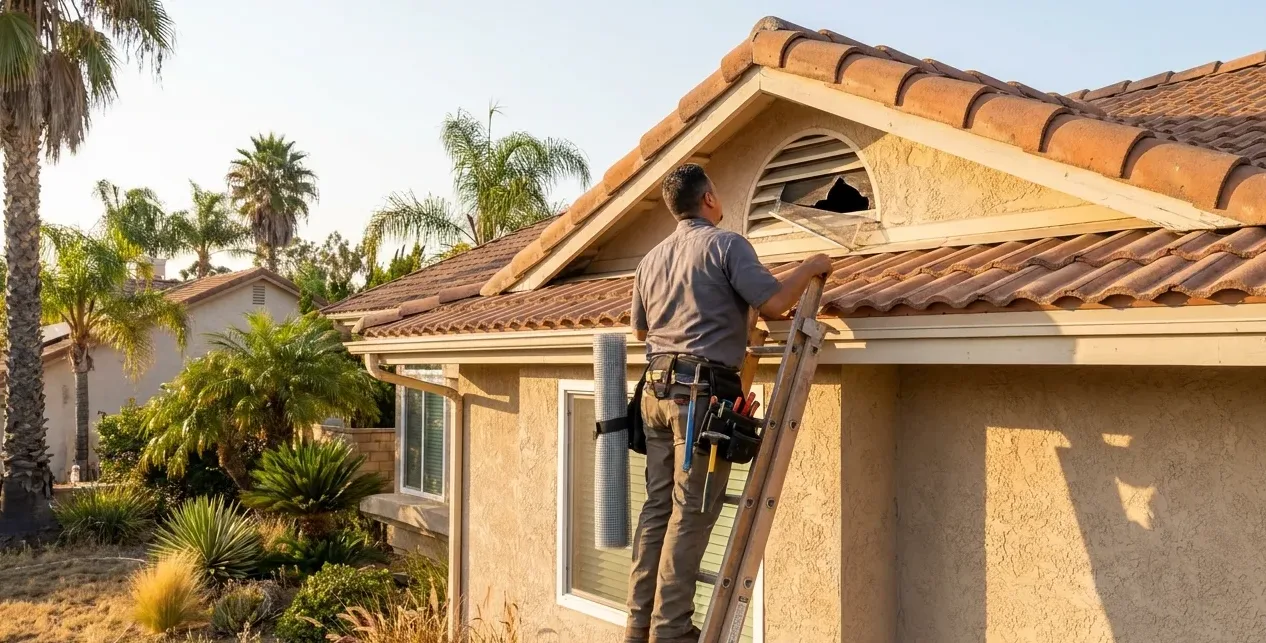
Gable vents, roofline junctions and the branch that gave them the roof in the first place.





Rodents do not keep office hours. Someone answers the Pasadena line at night and at the weekend, so you can book the visit when you find the problem rather than the next working morning.
Your technician confirms a window with you directly and works around school runs, shift patterns and trading hours instead of handing you a vague all-day slot.
Call before midday and same-day service across Pasadena is usually available. The person who inspects your property is the person who treats it and comes back for the follow-up.
The eastern fox squirrel is established throughout Pasadena and is the animal behind essentially every squirrel call we take. It is diurnal, so the giveaway is daytime noise overhead — scratching, rolling and running around mid-morning and again in late afternoon, which is what distinguishes it from a rat.
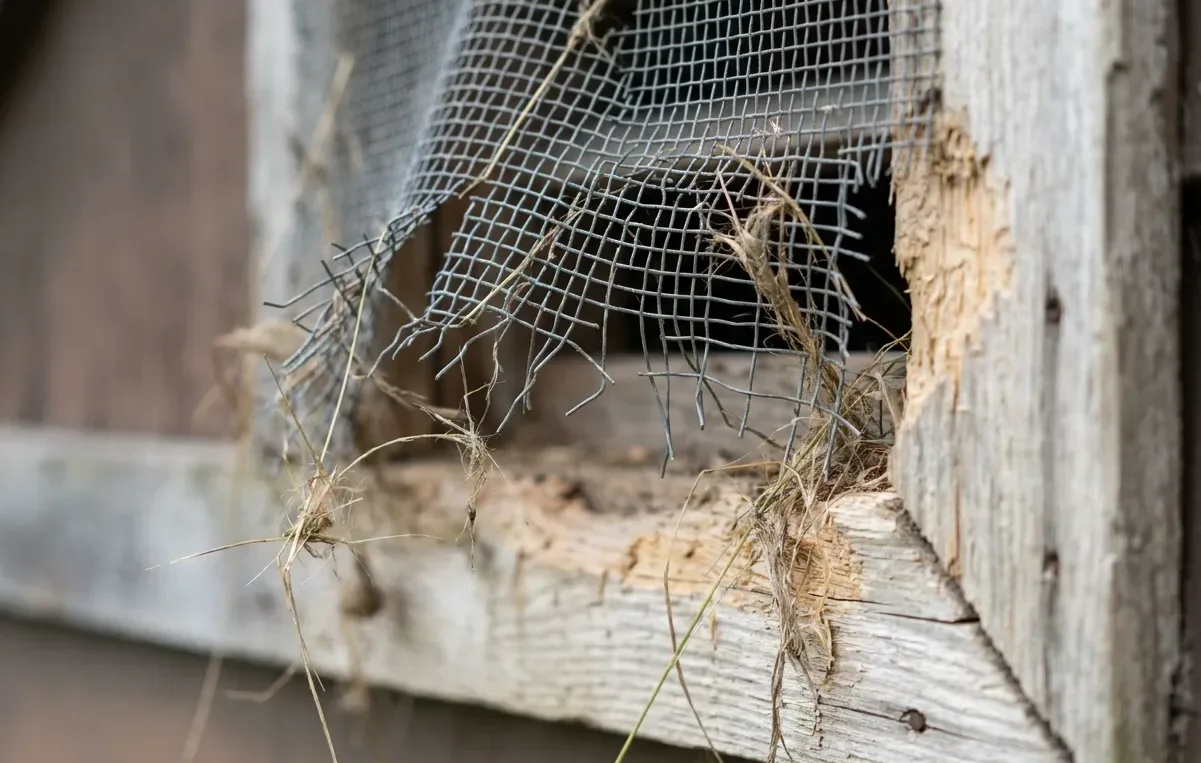
Squirrels rarely make a new hole. They find a fault that already exists and enlarge it: a gable vent with a corroded screen, a fascia board that has shrunk away from the tile course, a rotted soffit corner, or the gap where a patio cover was bolted on. That is why the repair is the treatment, and why sealing the building before the animals are out is the worst thing anyone can do.
Seal first and you trap animals inside. They will either die in the void, which is an expensive and unpleasant problem, or chew their way out through drywall, which is worse. If it is spring or late summer there may be dependent young, and a female sealed out from her litter will do serious damage getting back in.
So: confirm what is in there, confirm whether there are young, get everything out, then close the building. In that order, without exception.
The whole roof line, every vent, the soffit and fascia, the ridge, and the trees. A squirrel needs a branch within roughly two metres of the roof, so overhanging limbs are part of the survey.
Entry points seen from underneath, nesting material, droppings, chewed wiring and any sign of a litter. We listen before we look, because the direction and timing of the noise usually identifies the nest location before anyone goes up.
Where there are no dependent young, a one-way excluder fitted over the main entry lets animals leave and not return. It is the least stressful method and it works well.
Young that cannot leave on their own have to be removed by hand and reunited with the mother outside the structure, or the exclusion is delayed until they are mobile. We will tell you which applies and roughly how long it means waiting.
Used where exclusion is not practical. California regulates what may then be done with a trapped tree squirrel, and relocation is not the free-for-all people assume — we will explain the lawful options for your situation rather than imply something we cannot do.
Every opening is closed with material that will not be chewed through: heavy-gauge galvanised mesh, sheet metal flashing, replacement vent screens, and proper timber repair where the fascia or soffit has failed. Squirrel incisors go through plastic, foam and light aluminium without difficulty.
Nesting material and droppings are removed, contaminated insulation is bagged out, and the area is treated to break down scent marking. Squirrels return to a den site by smell, and leaving that in place invites the next one.
The most serious of it. Rodent incisors grow continuously and cable sheathing gets used to wear them down. This is a recognised cause of attic fires.
Compressed for nesting, tunnelled through, and soiled. It stops insulating and usually has to be replaced.
An enlarged entry hole at the roof line lets rain in. The leak is often discovered as a ceiling stain months after the squirrels have been dealt with.
Droppings and urine accumulate in the nest area, soak into insulation and drywall, and carry into the house through recessed lights and ceiling penetrations.
Rarely the worst damage but usually the reason people call. Fox squirrels are heavy enough to be genuinely loud on a ceiling.
Bulbs dug up, fruit taken, irrigation emitters chewed. Not a reason to treat the building, but frequently the first sign of a resident population.
Tell us what you have seen and where. We will book an inspection, put the findings in writing and only then talk about treatment.
Call (323) 301-7551The most reliable single indicator. Rats are active after dark.
Because closing a roof void at the wrong time of year seals a litter inside it, Rodent Control Pasadena checks for dependent young before any attic is shut.
Squirrels cache nuts and acorns in voids. A rolling noise across a ceiling is close to diagnostic.
Roughly fist-sized, with pale exposed timber and a scatter of chewed fibre below.
Watch the roof line for twenty minutes in the morning. They are not secretive.
Similar shape, noticeably bigger, with blunter ends, and usually concentrated near the nest.
How many animals, whether there are dependent young, how many entry points there are, how accessible the roof line is, and how much repair the fascia, soffit or venting needs. Insulation removal and replacement, where required, is the largest variable. The inspection is free and the findings are written down before any of that is quoted.
1. Contact us for a free inspection at 778 E Colorado Blvd or schedule online—our Pasadena team assesses the squirrel issue promptly.
2. We implement safe trapping and removal techniques customized for your property's needs.
3. Seal all entry points and apply deterrents to prevent re-entry by squirrels in Pasadena.
4. Follow-up inspection ensures complete eradication and leaves you with a plain prevention list.
Costs depend on the size and scope of the infestation. We offer free quotes from our Pasadena location at 778 E Colorado Blvd.
Yes, we use live traps and relocation compliant with local Pasadena and California laws so the work is lawful and humane.
Most jobs are completed in 1-3 days, with immediate relief from our expert team serving 91101.
Absolutely! We provide a 30-day satisfaction guarantee on all squirrel removal services to protect your investment.
One call books the inspection. We will tell you what we find, what it will take to fix and what you can do yourself — before you commit to anything.
Call (323) 301-7551