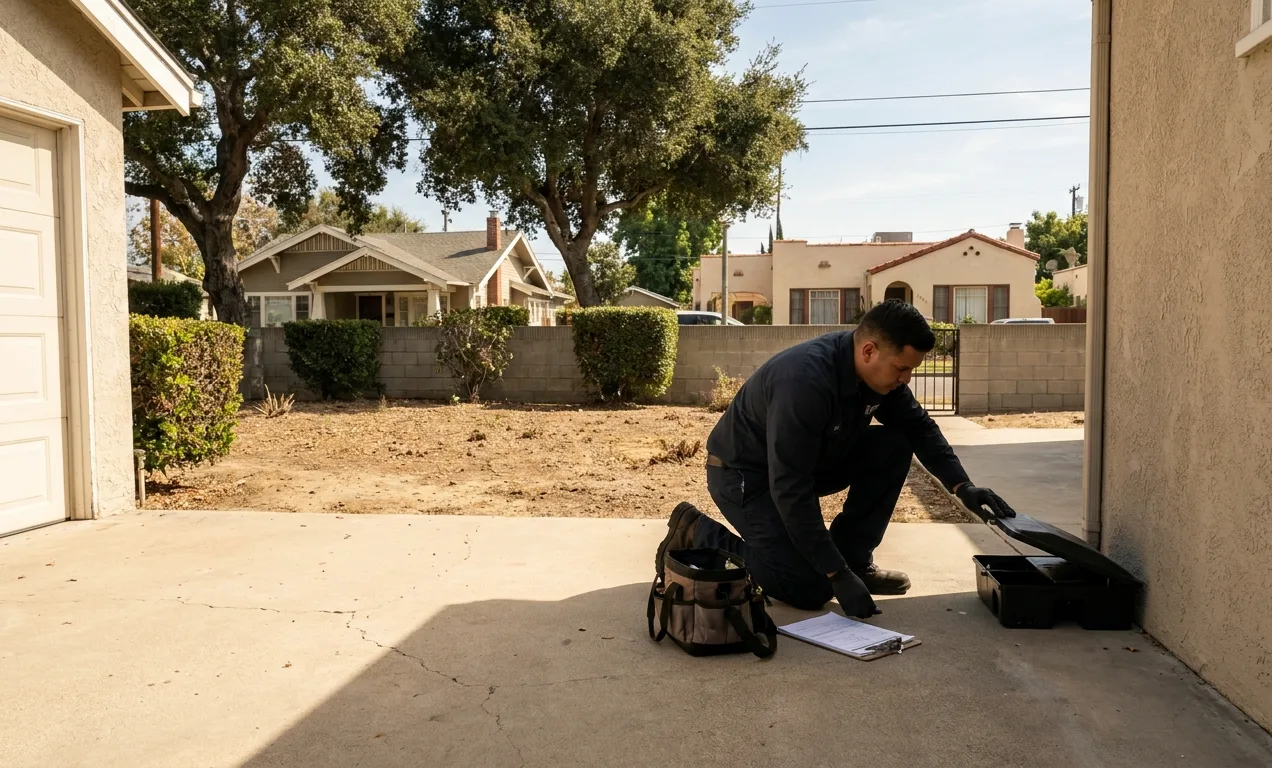
Identify the species, read the runs, close the building in metal, then clear what was left behind.





Rodents do not keep office hours. Someone answers the Pasadena line at night and at the weekend, so you can book the visit when you find the problem rather than the next working morning.
Your technician confirms a window with you directly and works around school runs, shift patterns and trading hours instead of handing you a vague all-day slot.
Call before midday and same-day service across Pasadena is usually available. The person who inspects your property is the person who treats it and comes back for the follow-up.
The rodent that dominates Pasadena is the roof rat, Rattus rattus. It is a climbing animal, and this is a city of mature oaks, jacarandas and long-established fruit trees with branches reaching over rooflines. It travels along limbs, fence tops and utility cables and enters at height, which is why so many households hear the problem before they ever see one.
Norway rats turn up around drainage, culverts and the lower ground near the Arroyo. House mice are a separate problem entirely, and mostly a feature of older properties where utility penetrations were never properly sealed. The three need different trap placement, different exclusion work and different expectations about how long it takes.
Putting bait out and leaving is the most common approach and the least satisfactory one. Three things go wrong with it. The population you kill is replaced within weeks, because the route in is still open and the territory is now vacant. Some of the animals die inside wall and ceiling voids, and a decomposing rat behind plasterboard produces an odour that lasts weeks and often needs the wall opened. And rodenticide in a suburb with owls, hawks and domestic cats carries a secondary poisoning risk that is worth taking seriously.
Rats, mice and squirrels are the whole of the work at Rodent Control Pasadena, which is why the survey starts on the roof and under the floor rather than in the room where the noise was heard.
We trap rather than scatter bait wherever we reasonably can, so what dies is recovered and removed, and then we close the building. Exclusion is the part that makes the result permanent. Everything else is temporary.
The inspection is the longest part of the visit and the part that determines everything else. We work the roof line, the eaves, every vent, the garage, the crawlspace or subfloor if there is one, the utility penetrations and the roof void itself.
Droppings, and how fresh they are. Rub marks — dark greasy smears where an animal has repeatedly squeezed past the same edge. Gnaw damage with pale, recently exposed wood. Urine staining under UV. Nesting material dragged into a corner: insulation, shredded cardboard, palm fibre.
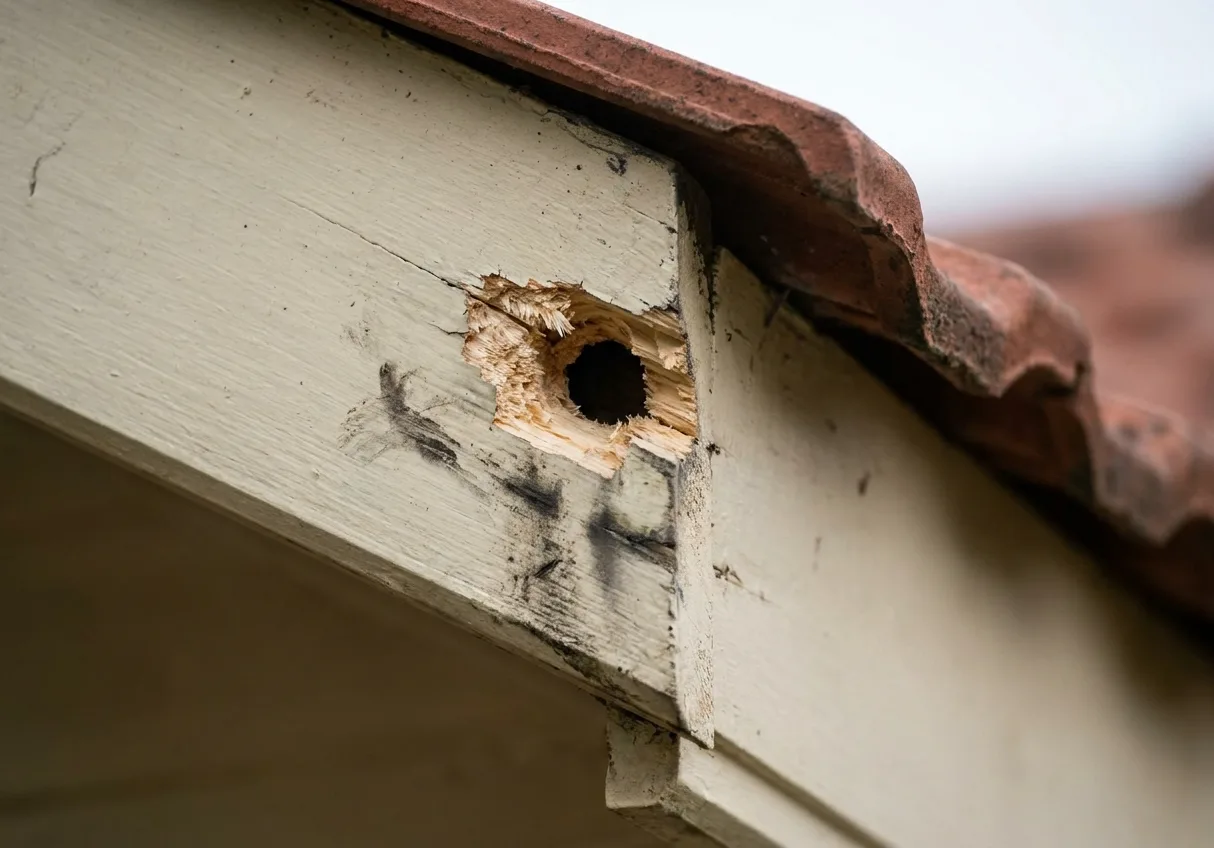
A roof rat needs a gap the size of a large coin. The recurring faults in Pasadena housing stock are the joint where a fascia board has shrunk away from the tile course, unscreened or rusted-through gable and eave vents, the gap above a garage door track, unsealed pipe and conduit collars, and the space where a patio cover was bolted to the wall.
Traps go on the runway, set perpendicular to the direction of travel, against the wall the animals are already using. Rodents move along edges rather than across open floor, so a trap in the middle of an attic catches nothing. Roof rats are neophobic and will avoid a new object for several days, so the first check is deliberately not the next morning.
Every gap on the list gets closed with material that cannot be chewed through: stainless steel mesh, hardware cloth, galvanised flashing, mortar where it is appropriate. Expanding foam on its own is not exclusion; a rat will be through it in a night. Where a repair is a carpentry job rather than ours we will say so and describe exactly what needs doing.
Droppings and contaminated insulation are removed, and the area is treated with an enzymatic product that breaks down the pheromone trail as well as the smell. This matters practically, not just cosmetically — scent marking is how the next animal finds the same route.
Rodent incisors grow continuously and have to be worn down, and cable sheathing is an ideal surface. Chewed wiring in a roof void is a genuine fire risk and is regularly found during post-fire investigation.
Gnawed irrigation lines, punctured flexible supply hoses and damaged condensate drains cause slow leaks that are usually discovered as a stain long after the water started.
Compressed, tunnelled and soiled insulation stops working. A roof void that has housed rats for a season often needs the insulation replaced, which costs more than the rodent work itself.
Rodents contaminate stored food and surfaces with droppings and urine. Rat-bite fever, leptospirosis and salmonellosis are all associated with rodent presence, and dried droppings disturbed during clean-up are the main exposure route — which is why the clean-up is done with proper equipment rather than a broom.
Rodent protein is a recognised asthma trigger. In households where someone has respiratory symptoms that track with activity in the roof void, this moves the job up the priority list.
Tell us what you have seen and where. We will book an inspection, put the findings in writing and only then talk about treatment.
Call (323) 301-7551Scratching and running after dark points to rats. The same noise during the day usually means squirrels, which need a different approach.
Rat droppings are spindle-shaped and 12–18mm; mouse droppings are 3–6mm and pointed at both ends. Concentration in one spot indicates a latrine, which means residency rather than a passing animal.
Persistent, ammoniac, and strongest near the harbourage. Often noticed in a garage or a closet backing onto an exterior wall.
Frequently the first reliable indication, and worth taking seriously before there is any other evidence.
Roof rats hollow out citrus and leave the peel hanging. A Pasadena garden with hollowed oranges has roof rats, whether or not they are in the house yet.
Rub marks accumulate over weeks and confirm a route in regular use. They are the single most useful thing to point a technician at.
The variables are how much of the building is affected, how many entry points there are and how accessible they are, whether the roof void needs clean-up and insulation work, and whether the property backs onto a canyon, an alley or a neglected neighbouring lot that will keep supplying animals. A hillside property with a complex roof line is a different job from a single-storey house on a flat lot. We inspect first and quote against what is actually there.
Step 1: Free Inspection - Our Pasadena experts visit your property at 778 E Colorado Blvd or your location to assess the rodent issue.
Step 2: Customized Treatment Plan - We develop a targeted plan using safe, effective methods for rodent control in Pasadena.
Step 3: Implementation & Removal - Apply treatments to eliminate rodents immediately and seal entry points.
Step 4: Follow-Up & Prevention - Schedule monitoring to ensure no recurrence, with ongoing support for Pasadena residents.
Costs depend on the scope of the infestation and the treatment package selected. Contact Rodent Control Pasadena for a free quote tailored to your 91101 property.
Yes, we use EPA-approved, eco-friendly products safe for children, pets, and the environment, specifically suited for Pasadena homes.
We offer same-day service for emergencies in Pasadena, ensuring fast relief from rodents in the 91101 area.
Absolutely! Our Pasadena rodent control includes a satisfaction guarantee with free follow-ups if anything returns within the warranty period.
One call books the inspection. We will tell you what we find, what it will take to fix and what you can do yourself — before you commit to anything.
Call (323) 301-7551